Trigger warning, this book review covers the topic of abuse. This book addresses abuse of various kinds. Reader proceed with caution as needed.
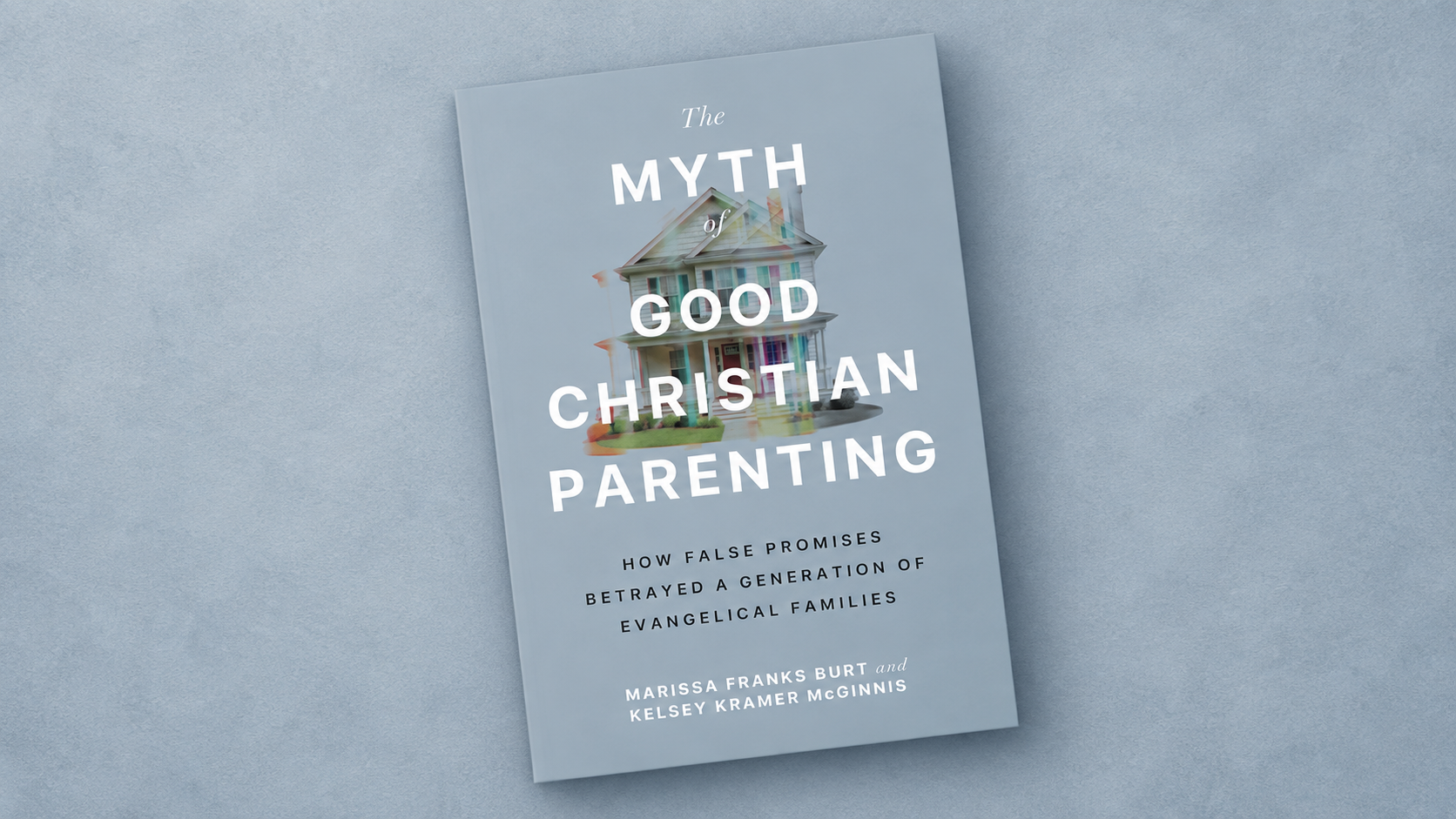
The Myth of Good Christian Parenting: How False Promises Betrayed A Generation of Evangelical Families by Marissa Franks Burt & Kelsey Kramer McGinnis provides a long overdue examination of marketed evangelical Christian parenting books in the West from the 1970s to modern Christian parenting influencers. The authors endeavor to process their own questions, concerns, and convictions about suggested parenting methods that hyper focused on obtaining child obedience through corporal punishment. Burt is a mother of 6, novelist, editor, teacher, and podcast host. McGinnis is a musicologist, educator, correspondent for Christianity Today and adjunct professor with a background in children’s rights and protection. Together, they come to this topic as part of their own journey to understand the impact of American Christian teachings on parenting and ideas of a “biblical family” and parental authority within the context of how the church has promoted these teachings.
A timely read
When I came across this book online, I found the title intriguing and was curious about what themes the authors would examine. As a parent and someone who has worked in various ministry roles, I have read several Christian parenting books. Some of the ones examined in this book I read during my time as a Bible college and seminary student. I too came to the topic of discipline with curiosity as my children got older and I sought to better understand what it meant to disciple my kids to know, love, and obey God. As a therapist, I work with a lot of parents from various backgrounds. I also work with adults who come from strict religious backgrounds who have been harmed by some of the teachings examined in this book. As someone who seeks to be a discerning reader and consumer, I appreciate the author’s intent to bring candor about their credentials with humility and curiosity to the examination process.
The authors conducted an informal survey that allowed both children raised in these teachings and parents who implemented them to share their experiences and perspectives. They also interviewed some respondents who parented “the Christian way” and identified feelings of guilt, shame, and fear that they’d parented wrong. Adult children raised in these practices reported experiencing confusion, difficulty connecting with others, and struggles with setting healthy boundaries in their relationships with others. The book puts these testimonies alongside a historical review of the evangelical timelines and cultural issues targeted in these discipline tactics leading up to modern day.
High controlling religious teachings
The authors of the parenting books often presented themselves as experts who begin by noting the frequently used Bible verse for parenting from Proverbs 22:6 of training up a child in the way they should go so their child doesn’t turn into a “prodigal.” This verse has been preached and taught as a guarantee for parents to have obedient children. It also permeates a hyper defensiveness warning parents if they don’t parent a certain way against the dangers of the world, then their children will be lost forever. This can lead to a parenting style that seeks to being controlling over one’s children based on fear rather than trusting in the Holy Spirit to be at work in one’s children. Additionally, it pits children and parents against one another by framing normal developmental boundary-testing as exclusively sin-natured hostility or rebellion aimed specifically at defying parents. This does not mean children cannot sin; rather, it recognizes the importance of understanding human development before interpreting a child’s behavior as deliberate sin. Such framing was used to validate the methods examined below.
Preaching and teaching about the sin nature, attributes of a biblical family, and parental authority are key components to the philosophy of Christian parenting books. Another key aspect involves the claim that to have godly and obedient children, physical punishment must be used (spare the rod, spoil the child). Not only must it be used, but godly parents are to employ it as part of their God-given authority over their children. The authors note how this view teaches children that physical harm is God’s punishment for bad or sinful behavior. Children also learn that “love” is demonstrated by receiving physical harm. This teaching can set children up to be vulnerable to experiencing abusive relationships in the future. The authors also reference research demonstrating the overall ineffectiveness of corporal discipline in regard to the outcomes promised by those supporting it. Important to note is that this style of parenting does not exhort parents to exercise humility and repentance about their own sin as part of the parenting strategy.
Two evangelical “parenting experts” closely examined include pastor Tedd Tripp in Shepherding a Child’s Heart (1995) and psychologist and founder of Focus on the Family, Dr. James Dobson who wrote, Dare to Discipline and The Strong-Willed Child: Birth Through Adolescence. Both men begin their parenting guidance with the position that children and parents are automatically at odds with each other from the start. Dobson spiritualizes developmentally appropriate behavior in children as part of their sin nature or rebellion and something to be “dealt with.” An example of this is when he writes, “a well-deserved spanking often turns a sullen little troublemaker into a sweet and loving angel.” Dobson validated his claim to implement physical discipline without accounting for the way Jesus interacted with children during his ministry on earth. The authors do well to note how several parenting experts were often self-credentialed about their expertise and amassed fortunes as parenting influencers during the 1990s.
Other parenting teachings authored by Gary and Anne Marie Ezzo, former members of John McArthur’s, Grace Community Church, were also examined. Years later, works like “Becoming Baby Wise, Growing Kids God’s Way” have been assessed and cited for “authoritarian and domineering leadership, dismissal from multiple churches, reported estrangement from adult children, and objections from external sources such as the American Academy of Pediatrics.”
To be clear, the authors are not out to villainize these authors and teachers.
They are seeking to encourage Christians to think critically about the parenting resources they read and utilize as to whether they are in tune with the compassionate love of Christ demonstrated in the Scriptures. They consider the American history context and impact of Christian parenting concerns used to validate prescribed parenting methods. They note how reactionary Christian parenting materials and topics were in response to the broader culture of the 1960s and 1970s and beyond. The authors are not out to write their own parenting book. They endeavor to challenge Christians to examine the teachings about parenting they have experienced and employ and to consider whether these are consistent with the teachings of Jesus’ grace, mercy, compassion, and love. They also encourage the reader to consider the author’s credentials when processing the material and considering it for their own family (there’s a helpful assessment checklist in the appendix for objectively reviewing resources).
The authors of the examined parenting books also utilized fear mongering and shaming for parents who failed to implement physical discipline strategies or obtained the intended compliance of their children. For those authors, obedience to parents was the goal, not cultivating a child’s heart that loves and enjoys God and knows that he or she is also loved and delighted in by God. This is demonstrated in Dobson’s, Parenting Isn’t for Cowards, emphasizing that supposed increased rebellious behavior as a failure of a lack of parenting. The authors are not advocating for total permissiveness, rather, a parenting style that reflects the loving God of the Bible who welcomed children and charges parents not to provoke their children to anger. Something to note is that if an adult were to physically harm another adult, this would be considered battery or assault depending on your state laws. In a work setting, if a colleague were to physically harm you, this would not only be considered unprofessional, but also assault. It begs to question then, why is hitting a child to obtain compliance or a desired behavior given less consideration in this regard?
The authors do well to humanize children as ones created in God’s image, worthy of respect and love (Genesis 3). They remind the reader that Jesus welcomed children who were considered vulnerable, powerless, and unwelcomed in his day (Matthew 19:14; Matthew 18:6). He encouraged the adults to bring children to him so he could be with them and bless them. Burt and McGinnis remind the reader that God is on the side of the “powerless” in the Scriptures, not those who are exerting power and authority over others. This is something to pay attention to. This is something that the examined parenting experts neglect to highlight in their writings and methods. The authors reference other writers of parenting books who encourage a different parenting perspective that honors a child’s autonomy to be independent in a healthy way where they learn boundaries and respect, where the parenting premise is not fear-based, and does not focus solely on the control and compliance of children’s behavior. Compliance does not equate a Godward heart.
The authors also examine why parents may struggle to give up spanking.
Parents may fear judgement from other parents and those around them if their children do not behave around others. They also may fear that a lack of physical discipline is insufficient to correct behavior. The authors encourage parents to examine their own hearts about their own anger and to consider parenting styles that honor the human dignity of their children as ones made in God’s image. Additionally, they encourage those who may be hurting after being raised under authoritarian discipline to seek professional help as they process and seek to heal from their experience.
I recommend Christian parents, pastors, church leaders and teachers, especially white evangelicals, to read this book with an open mind to see where their own parenting and parenting teachings may contain unbiblical and harmful parenting interpretations and applications. God’s grace is available for you to reexamine and change your application of such teachings to be more consistent with your heavenly Father’s own love and discipline towards you. If you need to repent of past parenting choices and styles, there’s grace for that too.
Counselors will also benefit from reading this book if you work with clients who were raised under these teachings or who are grappling with what it means to parent as a Christian. The church is wise to examine where it has failed parents and families with teachings that have harmed families and work to do better.
Lastly, I encourage those who experienced these teachings growing up to read with caution and at their own pace. If corporal punishment was combined with religion for discipline in your home, you will find this book triggering. You can skip over certain parts as needed to protect your well-being.
May those who are seeking healing, understanding, reconciliation, find some encouragement from the material in this book on their way. May we as Christians, seek to be discerning in the supplemental resources we read and apply so that they are in line with the love of God modeled through Christ Jesus his son. If you are feeling tempted to judge the authors of this book, or the writer of this review, I want to encourage you to take a moment and ponder what it is that’s driving this response for you.
Have you read this book? How were you impacted? What was challenging for you to read or grasp? Does this book make you feel defensive, angry, curious, or suspicious? Why?